Home Kanazawa Japan Ishikawa About
Home  ›  Asia  ›  Japan  ›  Kanazawa  ›  Food Guide
🇯🇵 Kanazawa Food Guide · 2026

What to Eat in Kanazawa
6 dishes that define Japan's Gold City

Forget Kyoto for a moment — Kanazawa has one of Japan's most fiercely local food cultures, fuelled by the Sea of Japan at its doorstep and a 300-year-old market that still supplies Tokyo's best sushi bars. Here are the six dishes that tell the story.

Why eat here

Kanazawa's kitchen is unlike anywhere else in Japan

People call Kanazawa the "Kyoto of the West" because it escaped wartime bombing, leaving its geisha districts and samurai neighbourhoods intact. What they talk about less is how the same historical luck also preserved a food culture of extraordinary depth. Omicho Market (近江町市場) has been running continuously for over 300 years, channelling fish from the Sea of Japan into the city every morning — which is why sushi here is often better than in Tokyo, where the same fish arrives a day later by lorry.

Add to that jibuni (治部煮), a duck stew that food historians trace to the kitchens of the Maeda lords who ruled Kanazawa during the Edo period and spent their considerable wealth patronising the arts — and cuisine. Then there is the gold. Kanazawa crafts about 99% of all gold leaf produced in Japan; the same artisanal tradition that gilded Kyoto's temples and Noh costumes now produces 24K edible gold for ice cream and chocolate. We have picked six dishes and food experiences that tell you most honestly who this city is.

The dishes

6 things to eat before you leave Kanazawa

Ranked by how uniquely Kanazawa each one is — these are not dishes you will find anywhere else quite like this.
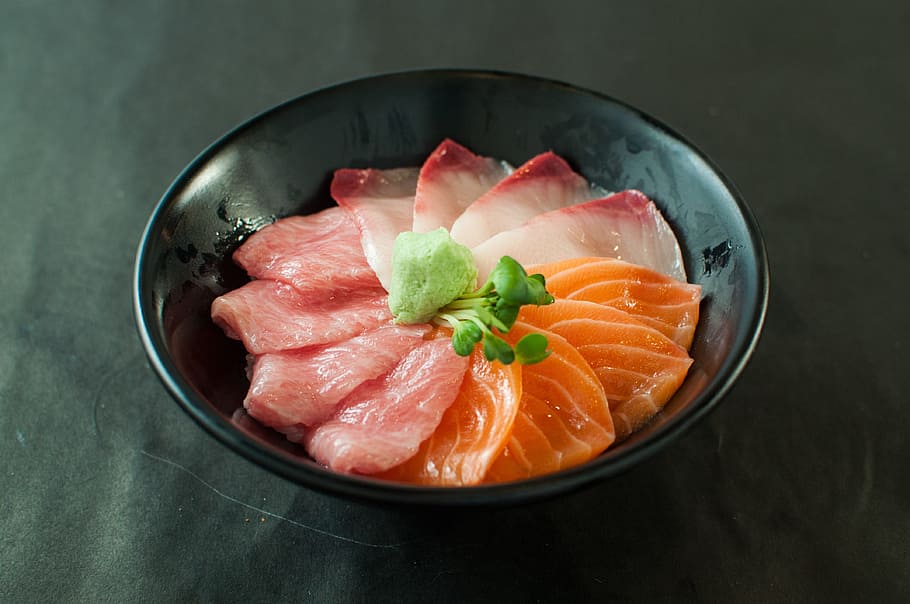
Kaisen-don seafood rice bowl in a dark ceramic bowl, layered with tuna, salmon and white-fleshed sashimi slices, with a dot of wasabi and micro greens 1
Kaisen-don (Seafood Rice Bowl)
海鮮丼 · morning catch from Omicho Market over warm rice

The kaisen-don at Kanazawa really is different — the fish landed a few hours ago, not yesterday, not from Tsukiji. More than a dozen rice-bowl restaurants ring Omicho Market, and the best ones change their daily toppings based on what arrived that morning. You might find nodoguro (blackthroat seaperch), amaebi (sweet shrimp), snow crab legs, botan shrimp and uni (sea urchin roe) piled over a bowl of warm short-grain rice. Budget ¥2,000–4,000 for a proper bowl, which is still significantly less than you would pay for the same quality at a Tokyo sushi counter. The honest tip: arrive between 09:30–10:00 before tour groups descend. By 11:30 the queue is long and the premium toppings start running out.
Where: Restaurants around Omicho Market · Itaru Honten (井ざゝ本店 · Imahaく district · local favourite) · Musashi Sushi near the station
Price: ¥2,000–4,000 per bowl (depends on premium toppings)
Hours: Omicho Market 09:00–17:00 · lunch service starts 11:00
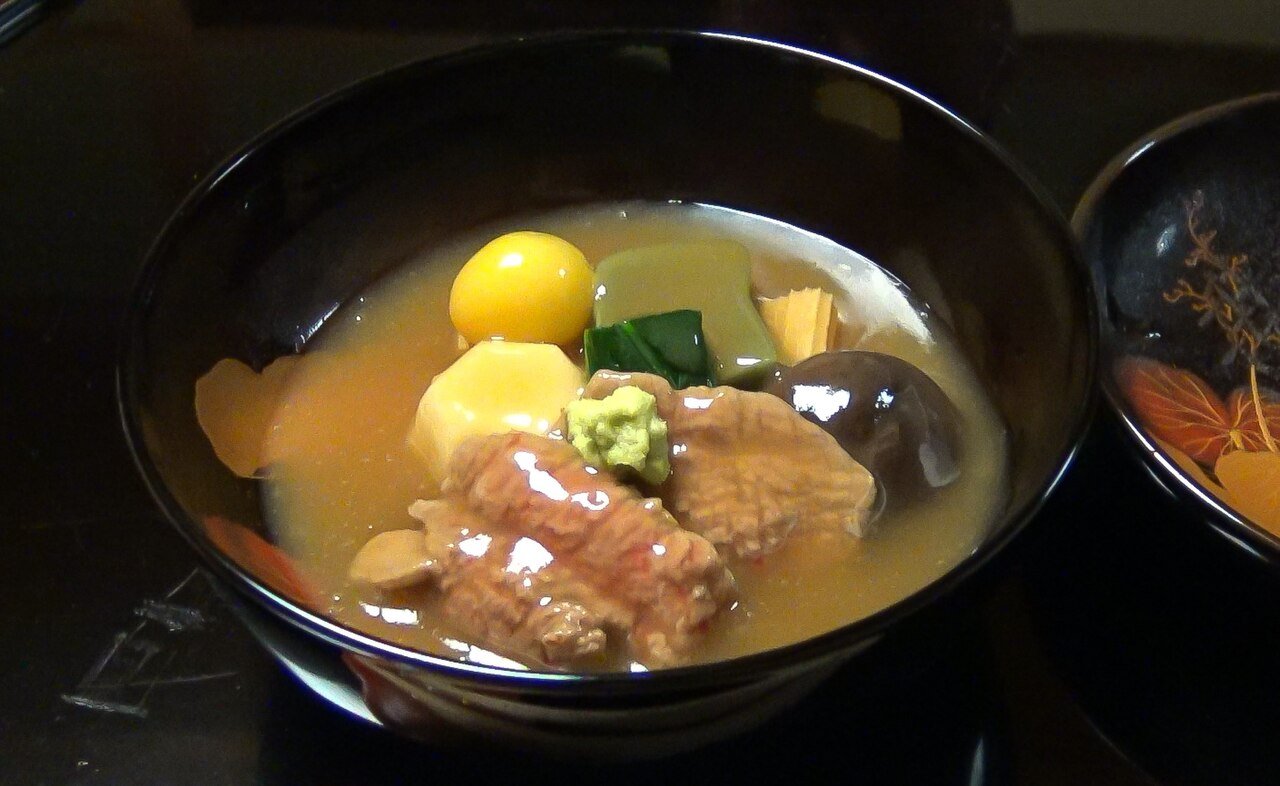
Jibuni, Kanazawa's traditional duck stew — duck and vegetables in a glossy amber dashi-soy broth, served in a black lacquer bowl 2
Jibuni (治部煮)
Kanazawa's signature duck stew · a 400-year-old recipe

Picture this: the Maeda clan ruled Kanazawa for over two centuries during the Edo period, spending lavishly on arts, crafts and — food. Jibuni is what survived. Duck slices are dredged in flour, then simmered in a broth of dashi, mirin, soy and sake until the liquid turns glossy and the duck is tender all the way through. The dish is always served with kuruma-fu — a round, egg-yellow baked wheat-gluten cake that drinks up the broth — along with shiitake mushrooms, mitsuba (Japanese parsley), and sometimes burdock root. The flour on the duck thickens the broth just slightly, giving each spoonful a silky weight. Eat it with plain white rice on a cold evening and you will understand immediately why Kanazawa is proud of this bowl.

Where: Otomaro (乙女楼 · Katamachi district) · Takezushi set lunch · washoku restaurants in Higashi Chaya district
Price: ¥1,500–3,500 for a set meal · kaiseki dinner from ¥8,000+
Tip: Order the lunch set (teishoku) — same dish at roughly half the price of dinner
🐟3
Nodoguro (Blackthroat Seaperch)
ノドグロ · the fish Tokyo chefs import from Kanazawa

Nodoguro translates literally as "black throat," named for the dark interior of its mouth. Its other name, Rosy Seabass, suits the pink glow of the flesh better. The fat content is unusually high for a white-fleshed fish — Japanese food writers call it "the otoro of white fish" — and when you taste it, either as silky sashimi or grilled whole with just salt (shioyaki), the comparison makes sense: a sweet, buttery richness that coats the mouth. Tokyo's most celebrated omakase counters fly it in from Kanazawa and the Noto Peninsula. Here, it comes off the boat and onto your plate in the same morning. Nodoguro is available year-round but peaks between October and March when cold water raises the fat content further.

Where: Itaru Honten (sashimi and nigiri · perpetually packed) · Omicho Market (affordable pieces) · omakase sushi counters near the station
Price: Nigiri ¥500–800 per piece · whole grilled fish ¥2,000–4,000 · sashimi set ¥1,500–3,000
Season: Year-round — best Oct–Mar when fat is highest
🍢4
Kanazawa Oden (金沢おでん)
Lighter dashi broth · local gluten cakes · Sea of Japan seafood

Yes, oden is everywhere in Japan — but Kanazawa's version has ingredients you will not find elsewhere. The broth is made from katsuobushi and kombu, kept deliberately light and clear rather than the dark, intense stock used in Tokyo. Two items are non-negotiable in a proper Kanazawa bowl: kani-men, a round wheat-gluten cake moulded to vaguely resemble a crab, and kuruma-fu, an egg-yellow baked gluten ring that swells with broth until it is barely solid. Fresh seasonal seafood from the Sea of Japan — oysters, clams, whole fish — also goes in. The broth is so restrained that you can eat a large bowl without feeling heavy, which makes it perfect after a cold afternoon at Kenroku-en. Best season: winter (December–March), but shops are open year-round.

Where: Tamatei (玉家 · Katamachi · open late) · Shintaro near Musashi Intersection · oden bars throughout the Katamachi district
Price: ¥150–400 per item · 5–6 items + broth ¥1,000–2,000
Tip: Order kani-men and kuruma-fu first — they sell out fastest
🍛5
Kanazawa Curry (金沢カレー)
Jet-black sauce · piled rice · stainless steel plate · eaten with a fork

If you think Japanese curry is always that mild, warm-brown gravy, Kanazawa will prove you wrong. The local style is darker — almost black — because caramel, extra spices and a long reduction bring the sauce to a thick, glossy depth that clings to the rice like a slow-pouring molasses. It is served in a shallow stainless steel plate, not a bowl, with the rice mounded in the centre and sauce poured generously over. The eating implement is a fork, not a spoon, and locals usually mix as they go. Standard topping is katsu (breaded pork cutlet or chicken) fried to order on top of the pile. Go Go Curry (ゴーゴーカレー) started here in Kanazawa before expanding across Japan and is the obligatory first port of call for any visitor — the small bowl is actually very filling.
Where: Go Go Curry (multiple branches · the original Kanazawa style) · Champion Curry (Champ Curry · the historic rival) · Gold Curry near the station
Price: ¥700–1,200 per bowl (size and topping dependent)
Tip: Eat it while hot — the sauce thickens considerably as it cools
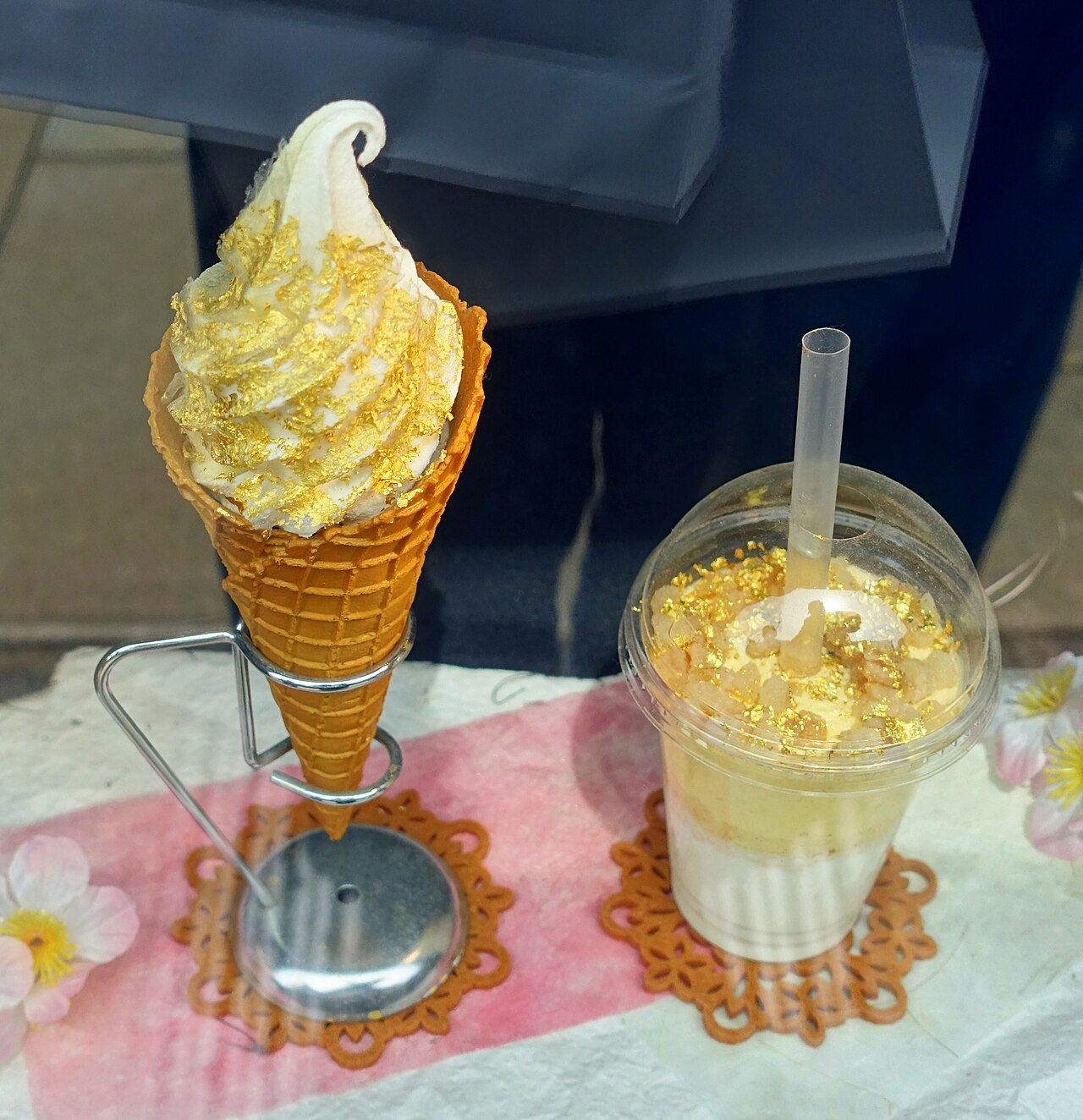
Gold-leaf soft-serve ice cream cone in a waffle cone on a metal stand, flecked with real 24K gold leaf, alongside a gold-topped milkshake in a plastic cup 6
Gold Leaf Soft Cream
金箔ソフトクリーム · real 24K gold on every scoop

Kanazawa makes about 99% of all the gold leaf produced in Japan. The artisans here have been hammering gold into paper-thin sheets for centuries — supplying the gold for Kyoto's Kinkaku-ji, for lacquerware, for Noh costumes and ceremonial objects. At this level of thinness, gold leaf becomes food-safe: the body cannot absorb pure gold, and it has no taste, but the shimmer as you hold the cone up and the flakes catch the light is one of the more memorable sensory moments you can have in Japan for under ¥1,500. The vanilla soft-serve underneath is genuinely good — dense, cold, milky — which matters because the gold is the spectacle and the ice cream is the meal. Buy yours at the Hakuichi branch in Higashi Chaya and the backdrop of Edo-period wooden townhouses makes the photograph inevitable.

Where: Hakuichi (箔一 · Higashi Chaya branch is the best location) · Kanazawa Hakuza near the station · shops around Omicho Market
Price: ¥800–1,200 per cone · gold-leaf chocolate from ¥500
Tip: The Higashi Chaya branch gives the best photo backdrop — go mid-morning before the crowds
One-day eating plan

How to eat Kanazawa in a single day

Six dishes, all walkable — no taxi required if you start at the station end of the city.

09:00
Morning — Kaisen-don at Omicho Market Walk straight from the station to Omicho Market. Spend 30 minutes browsing the fish stalls — watch what has just come in from the Sea of Japan — then pick a kaisen-don restaurant with nodoguro or uni in today's toppings. Budget ¥2,000–4,000 and you will not need to eat again until mid-afternoon.
11:00
Walk to Higashi Chaya — one piece of nodoguro sushi The walk from Omicho to Higashi Chaya takes about 15 minutes. Stop at a small sushi counter en route — order one or two pieces of nodoguro nigiri (¥500–1,200 total) for the fish, not a full meal. You are comparing it to what you just ate at the market, which makes the context clear.
12:30
Gold-leaf soft cream at Hakuichi, Higashi Chaya Buy a gold-leaf soft-serve at the Hakuichi branch on the main street of Higashi Chaya. Eat it walking slowly through the district — the wooden facades, the stone path and the melting gold make for a very specific kind of afternoon.
15:00
Kenroku-en then Kanazawa Oden in Katamachi After the garden, make your way to the Katamachi district. Find an oden counter bar, pull up a stool and order kani-men, kuruma-fu and oyster for about ¥1,000–1,500. This is exactly what locals do on a cold afternoon and it hits as well as it sounds.
19:00
Dinner — Jibuni at a washoku restaurant A traditional Japanese restaurant in Katamachi or Higashi Chaya will have jibuni on the dinner menu for ¥2,000–3,500 as a set. Sit at a wooden counter, order a local Ishikawa sake and let the duck stew in its glossy dashi broth finish the day properly.
Eating districts

3 neighbourhoods every food lover must know

Kanazawa is walkable — planning your eating around districts is more efficient than chasing individual restaurants.

1
Omicho Market (近江町市場)
Kanazawa's kitchen · 300 years of daily trading · 10-minute walk from the station

The covered market at the centre of the city has over 180 shops selling fresh seafood, vegetables, meat and prepared food. Upstairs and around the perimeter, a cluster of restaurants serves kaisen-don and sushi to both tourists and the locals who shop here every morning. When you see residents buying fish for dinner next to tour groups photographing tuna, you know the produce is genuine.

Hours: Most shops 09:00–17:00 · Getting there: 10-min walk east of Kanazawa Station
2
Higashi Chaya District (東茶屋街)
Geisha district · gold-leaf sweets · matcha cafes · sake shops

The most photogenic neighbourhood in Kanazawa — narrow stone-paved lanes lined with Meiji-era wooden townhouses. Inside, you will find the Hakuichi gold-leaf ice cream shop, matcha soft-serve cafes, traditional wagashi (Japanese confectionery) shops, and several quality dinner restaurants serving jibuni. The district is best in the morning before midday crowds and again at dusk when the paper lanterns start to glow.

Getting there: 12-minute bus from the station or 20-minute walk through Omicho Market
3
Katamachi District (片町)
Evening eating and drinking · oden bars · izakaya · Kanazawa curry

If Higashi Chaya is Kanazawa's cultural face, Katamachi is the lived-in one. This is where locals eat and drink after work — oden counters open from late afternoon, izakaya with Sea of Japan seafood pack out by 7 pm, and multiple Kanazawa curry shops including Go Go Curry are clustered in the side streets. The best time to visit is between 18:00 and 22:00.

Getting there: 15-minute bus from the station or 12-minute walk from Kenroku-en
Common questions

FAQ · What people ask before eating their way through Kanazawa

When does Omicho Market open and what is the best time to visit?
Most shops at Omicho Market open around 09:00 and close by 17:00. Lunch restaurants start serving from 11:00. The best window is 09:00–10:30, before tour groups arrive — fish selection is at its broadest then and there are no queues. Weekdays are noticeably calmer than weekends. Some individual shops close on Wednesdays. The market is a 10-minute walk east of Kanazawa Station.
Where can I eat jibuni in Kanazawa and how much does it cost?
Jibuni is served at traditional Japanese (washoku) restaurants throughout Kanazawa. Reliable options include Otomaro (乙女楼) in the Katamachi district and several restaurants in the Higashi Chaya geisha district. A jibuni set meal with rice and miso soup costs ¥1,500–3,500 per person. A full kaiseki dinner featuring jibuni starts at ¥8,000 or more. Lunch sets offer the same dish at roughly half the dinner price.
What is nodoguro and why is it more expensive than other fish?
Nodoguro (Blackthroat Seaperch / Rosy Seabass) is a deep-sea fish caught in the Sea of Japan off the Ishikawa coast. Its flesh contains significantly more fat than most white-fleshed fish, giving it a sweet, buttery quality Japanese food writers describe as "the otoro of white fish." Limited supply and difficult transport push prices up. A single piece of nodoguro nigiri at a sushi counter costs ¥500–800. A whole grilled nodoguro at a sit-down restaurant runs ¥2,000–4,000. For the most affordable taste, buy a single piece at Omicho Market.
How is Kanazawa oden different from Tokyo oden?
Kanazawa oden uses a lighter, clearer dashi stock made from katsuobushi (smoked bonito) and kombu, giving a more delicate flavour than the darker Tokyo broth. The two items that make a Kanazawa bowl distinctive are kani-men (a round wheat-gluten cake shaped to suggest a crab, which absorbs the broth beautifully) and kuruma-fu (a baked wheat-gluten ring with an egg-yellow colour). Fresh seasonal seafood from the Sea of Japan — oysters, clams, whole fish — also appears in many bowls. The best season is winter (December–March) but oden shops in Kanazawa are open year-round.
Is the gold on Kanazawa ice cream real gold and where do I buy it?
Yes, it is genuine 24K gold leaf (kinpaku). Kanazawa produces roughly 99% of all gold leaf made in Japan. Pure gold at this thinness is food-safe — the body cannot absorb it and it changes nothing about the taste. The most famous shop is Hakuichi (箔一), with branches at Higashi Chaya, Omicho Market and near Kanazawa Station. Gold-leaf soft-serve costs ¥800–1,200 per cone. The Higashi Chaya branch gives the best photo backdrop: wooden Edo-period townhouses and stone lanes behind you as you bite through the gold.